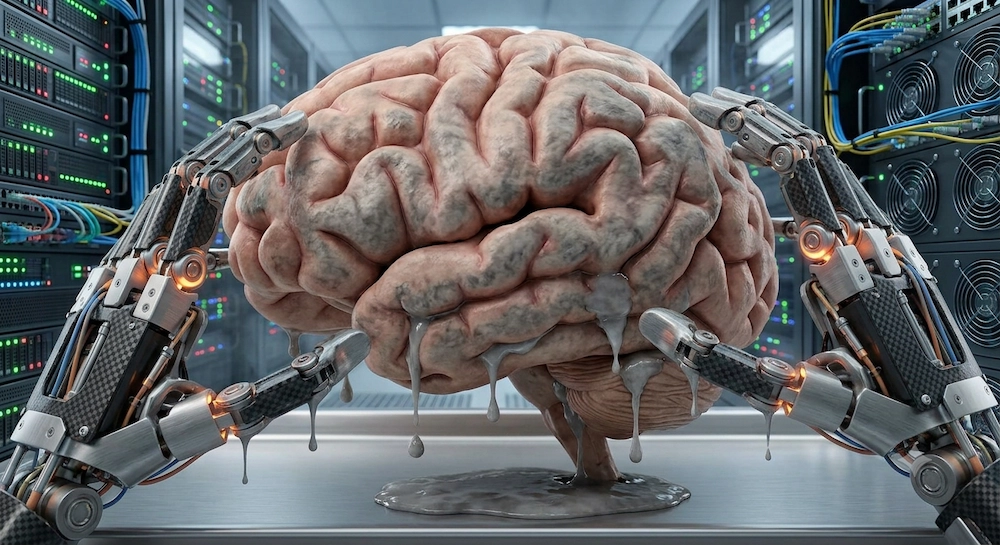
For a while I used AI for almost everything. The short-term gains were real. The long-term cost showed up later.
What went wrong
I was so impressed with what AI could do and with how much faster I suddenly felt, that I went all in. Coding, research, planning, even life advice: I started handing everything to a model.
Social media made it worse. Everywhere I looked, people were claiming 5x or 10x gains, outsourcing their entire workload to a VA, and promising unlimited free time. The pitch was hard to resist.
At first it really worked. I could contribute in unfamiliar languages almost overnight. AI felt like a peer programmer and a consultant rolled into one. The short-term productivity gains were huge. Then I started asking a harder question: was I building or losing on the long term?
A couple of weeks ago I sat down to solve a tough computer problem. After barely a minute of thinking, I opened Claude and asked for the answer. That was the moment I realised: my brain had gone soft. It no longer wanted to do heavy lifting. The second something felt hard, I reached for the easy route Claude, Gemini, whatever was closest.
I’m not alone in this. Studies keep finding that people who lean heavily on AI show lower brain engagement and signs that their mental muscle is fading. Robert and Elizabeth Bjork at UCLA put it more sharply: the brain only builds lasting memory pathways when it does the hard work itself. By outsourcing every hard moment to AI, I was doing the opposite.
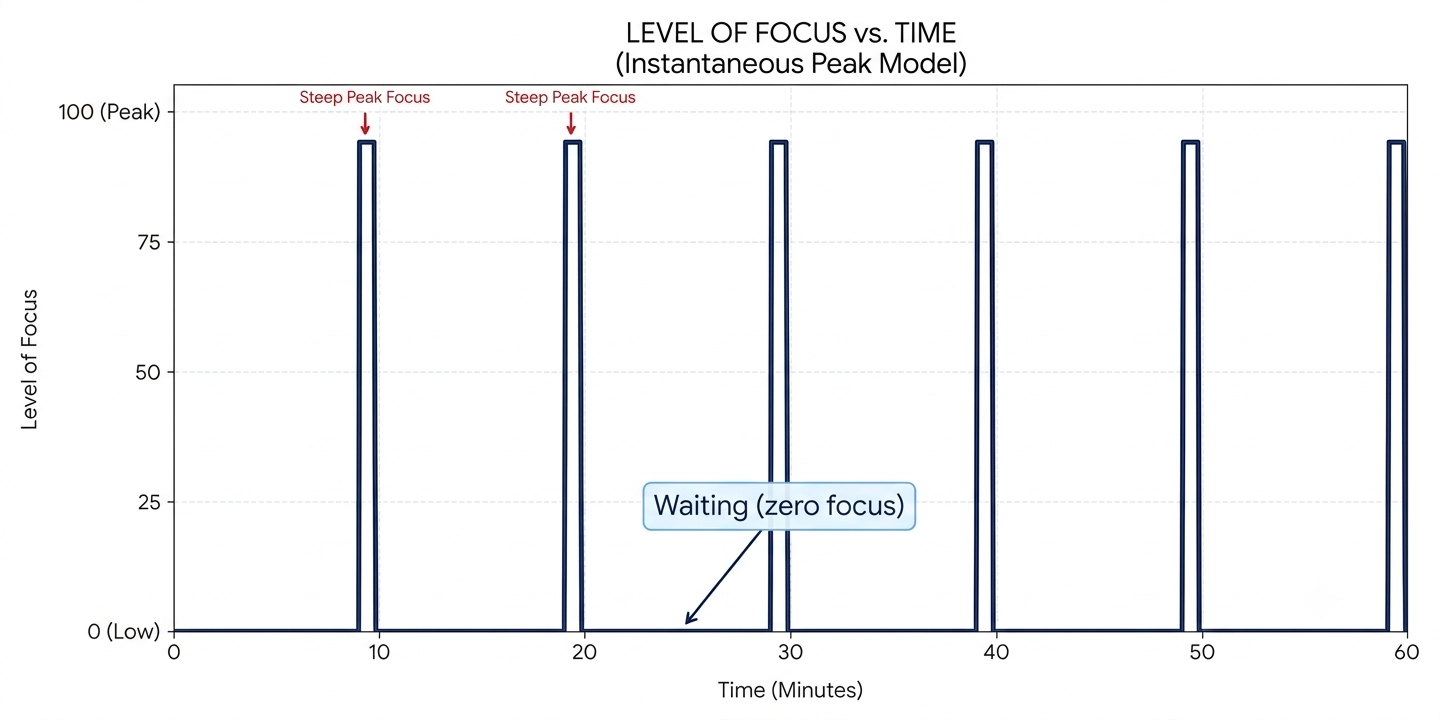
Coding made a second problem obvious. My attention span got shorter. I would focus while instructing the model, then drift while I waited for it to crunch through the code. Result: short spikes of effort, long gaps of waiting.
Damage prevention
I hit the emergency brake because if I continued like this my cognitive abilities would suffer on the long term. That’s why I wrote a plan that consists of 2 major actions:
- Use AI where it adds value
- Sharpen my brain.
Use AI where it adds value
The first part of my plan was critically reviewing my AI usage and only apply it where it made sense. I know that I used AI mostly for four things.
Solving complex problems. Let’s be fair: AI don’t shine in this space anyway, so why should I waste any tokens on even trying it.
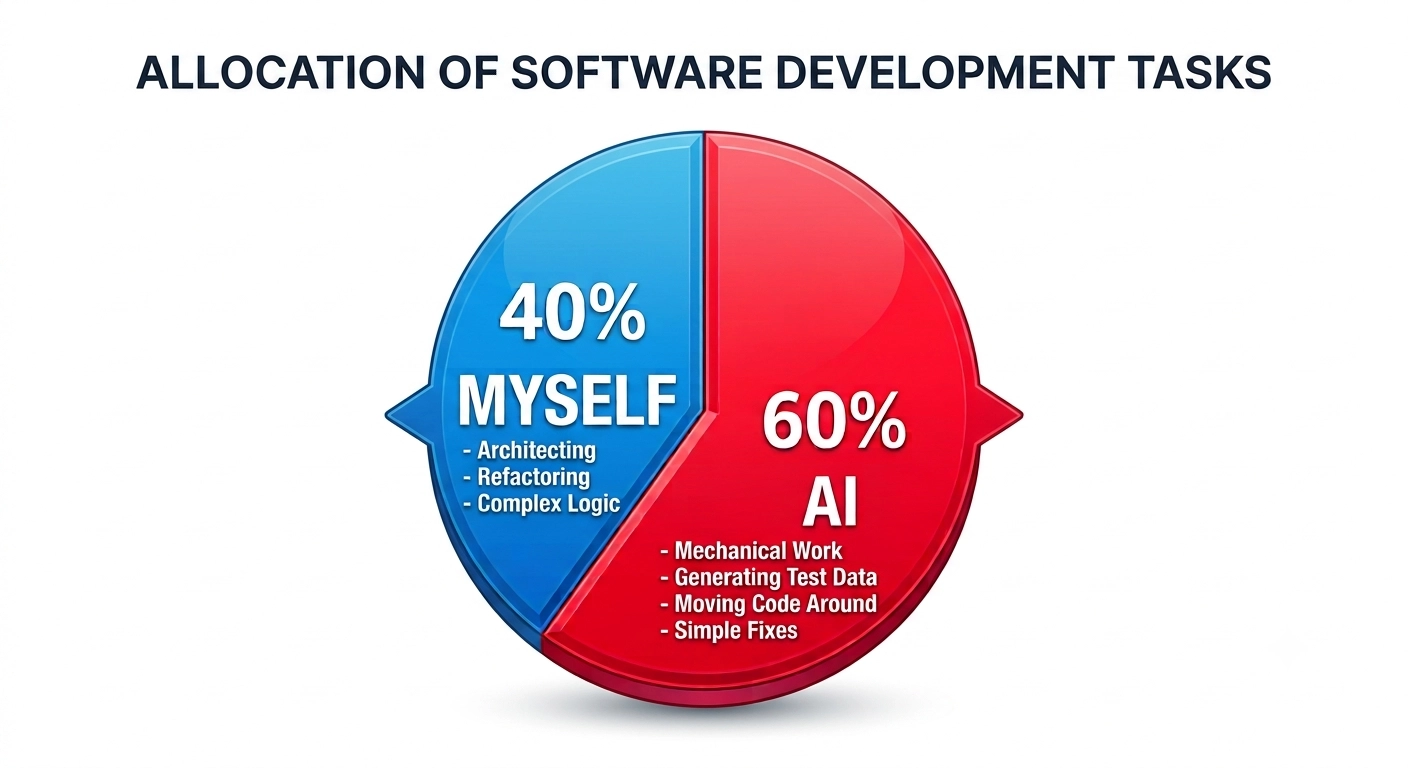
Coding. Very controversial since I will lose a bit of productivity, but I felt like I can make a meaningful split between complex tasks that require my ability to solve problems and mechanical tasks that AI can do more efficient and I will learn little from it.
Writing. I totally removed delegating my writing to AI. One of the things I want to get better at is putting my thoughts on paper and show my own story rather than a story full of cliches and incoherent paragraphs.
Gathering information. Instead of asking AI for the answer, I started using it as an exploration agent. If I wanted to learn how to ship products to the USA, I asked it for the most credible sources on VAT, shipping, customs, and so on. After each pass I moved deeper: find me sources on problem X, or case studies on Y. It did surprisingly well finding sources and I did the heavy work: evaluating the information.
Sharpen my brain
The brain is the most important tool I have, and like any muscle it needs exercise. I already knew I needed to rebuild focus and deep work. Cal Newport’s video on reversing brain rot put useful language on that and a few of his ideas made it into my own plan.
Journalling. Beyond just archiving your thoughts for later, journalling forces my thinking into structure. When I’m working through a complex topic, I lean on the Feynman Technique, writing it out as if I’m explaining it to someone with no background in the subject. If I can’t make it simple on paper, I don’t actually understand it yet. I also journal at the end of each day, less for the notes themselves and more as a ritual to review what happened and close the day with a clear head.
Reading. I read for at least half an hour every day, often more. It’s one of the few activities that pulls my brain into a genuinely deep level of focus, no notifications, no multitasking, just one thread of thought. I balance fiction and non-fiction deliberately: non-fiction feeds my brain with new insights and skills, while fiction is where I relax and let my imagination stretch.
Improve focus. How did I actually improve my focus? It starts with cutting off my dopamine supply: short videos, social media, notifications. I used to reach for my phone and scroll any time I had to wait for something: in line, on a call, between tasks. That constant drip of quick, easy stimulation is exactly what trains my brain to resist longer, slower forms of focus. I used Bob Proctor’s exercise to improve focus: put a dot on the wall (with pencil), sit in front of it and stare for it as long as I can to not get distracted. In the beginning I barely could complete ten seconds but now I am able to do it for minutes.
Plan deep work. I’ve noticed I have two peak windows where my brain performs at its best: 10:00 to 13:00 and 16:00 to 19:00. So I deliberately schedule my heaviest, most demanding tasks inside those windows, and save lighter, more mechanical work for the dips in between.
Results after a month changing the tide
Looking back, the change in my ability to focus has been dramatic. I can now sit through long podcasts without the itch to check my phone, and I’ve even missed a digital meeting simply because I was too deep in my work to notice the time. Yes, I’ve given up a bit of raw output speed when coding, but the quality of my reviews and my work has gone up in return. I find myself diving into legacy code and actually understanding why it works the way it does, instead of just scratching the surface and doing the bare minimum to get by.
The brain, it turns out, is a muscle. And like any muscle, it grows stronger the more deliberately you train it, or weaker the more you let something else do the lifting for you. AI is tempting precisely because it offers quick answers with none of the friction, but that friction is often where the real training happens.